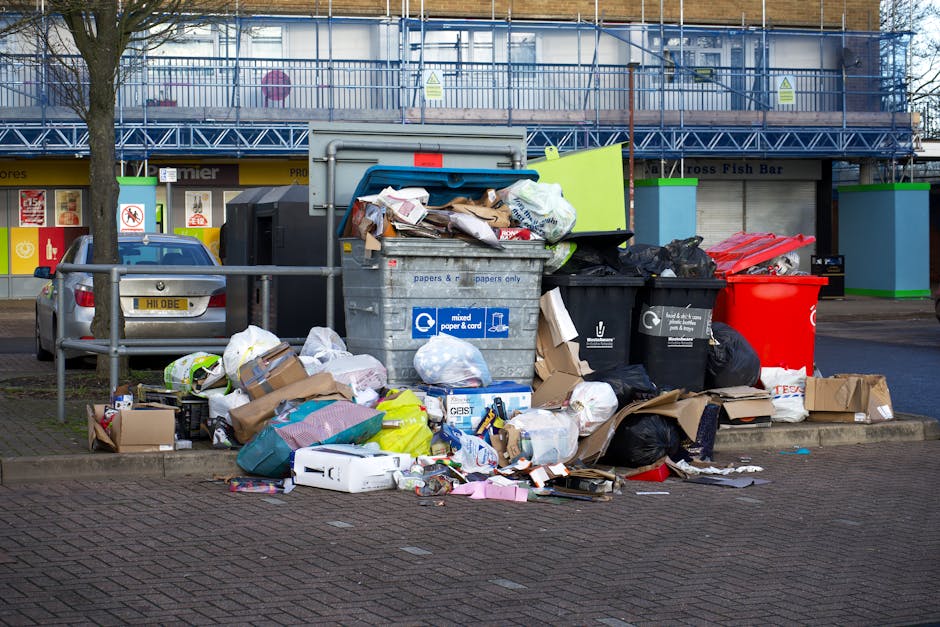
What to know about last minute rubbish clearance in Cobham
If you need rubbish gone quickly, last minute rubbish clearance in Cobham can feel like one of those jobs that suddenly becomes the most urgent thing on your list. Maybe the garage is packed, a tenancy is ending, or you have builders arriving earlier than expected. Whatever the reason, the pressure is real. And yes, in a place like Cobham, where homes, driveways, access routes, and parking can vary quite a bit, the difference between a smooth clearance and a stressful one is often down to preparation.
This guide walks you through what last minute rubbish clearance actually involves, how it works, what to check before you book, and how to avoid the common slip-ups that create delays. You will also find practical tips on compliance, waste types, costs, and when a fast clearance is the smartest option. In our experience, a calm five-minute plan saves a lot more time than a rushed hour of sorting ever will. Funny how that works.
Table of Contents
- Why last minute rubbish clearance in Cobham matters
- How last minute rubbish clearance in Cobham works
- Key benefits and practical advantages
- Who this is for and when it makes sense
- Step-by-step guidance
- Expert tips for better results
- Common mistakes to avoid
- Tools, resources and recommendations
- Law, compliance, standards, or best practice
- Options, methods, or comparison table
- Case study or real-world example
- Practical checklist
- Conclusion
- Frequently asked questions
Why last minute rubbish clearance in Cobham matters
Speed matters because rubbish has a habit of getting in the way at the worst possible time. A half-cleared hallway can block decorators. A pile of old furniture can delay a sale, a move, or a renovation. Garden waste left sitting out can attract weather damage and, frankly, just makes the place feel more chaotic than it already does. When you need rubbish removed quickly, the goal is not just to "get rid of stuff"; it is to restore control.
In Cobham, there is also a practical local angle. Properties may have limited access, shared drives, narrow roads, or parking constraints that make same-day or next-day removal harder if the job is not planned properly. That is why a last minute clearance needs a bit more thought than people expect. You want speed, yes, but you also want the right vehicle, enough manpower, and a team that understands how to work efficiently without causing a fuss.
Key point: the best urgent clearances are not just fast. They are organised, lawful, and matched to the type and amount of waste you actually have.
A rushed clearance done badly usually costs more in time, stress, and callbacks than a properly planned one. That sounds obvious. Yet people still find out the hard way.
How last minute rubbish clearance in Cobham works
Most urgent rubbish clearance jobs follow a fairly simple process, although the quality of the service can vary. Typically, you contact the provider, explain what needs removing, share a few photos if possible, and request the soonest available slot. If the job is straightforward, a crew may be able to quote quickly and arrive the same day or next day. If the waste is bulky, mixed, or awkwardly placed, they may ask a few extra questions before confirming.
The smoother the information you give, the smoother the clearance tends to be. That includes access details, stairs, parking restrictions, whether items are upstairs or in a loft, and whether there are any restricted materials. If you leave out a mattress in the attic or a pile of broken shelving in the garden shed, the final job can become a different beast entirely.
Here is the usual flow in plain English:
- You describe the rubbish and how much there is.
- You share location and access details.
- The provider confirms availability and an estimate.
- The team arrives with the right vehicle and equipment.
- Items are removed, loaded, and sorted for disposal or recycling.
- You should receive confirmation of what was taken and how it was handled, depending on the provider's process.
Some people expect urgent clearance to be a chaotic, one-size-fits-all dash. It does not have to be. A good crew works methodically, even if the booking was made five minutes ago. And to be fair, that calm approach is usually what separates a professional job from a stressful one.
Key benefits and practical advantages
The obvious benefit is speed. But there is more to it than that. Last minute rubbish clearance can reduce pressure when time is tight, help you meet a deadline, and stop the clutter from spreading into other parts of the property. That matters whether you are clearing a home, a rental, a garage, or a small business unit.
There is also a psychological benefit people underestimate. Once the rubbish is gone, the space tends to feel bigger, cleaner, and easier to think in. You notice it immediately. The room breathes again.
- Faster turnaround: useful when you are preparing for a move, delivery, viewing, or contractor visit.
- Less disruption: a one-off clearance can be simpler than trying to chip away at the job yourself.
- Better space use: clear floors and access routes make the next stage easier.
- Reduced stress: especially if the deadline is close and the pile is bigger than expected.
- Potential recycling value: many mixed loads still contain recyclable materials if sorted properly.
A small but important advantage: professional teams can often handle awkward items more safely than a DIY attempt. Old wardrobes, broken appliances, heavy drawers, and damp garden waste are not glamorous, and let's face it, nobody wants a strained back because a sofa got stuck in a doorway.
Who this is for and when it makes sense
Urgent clearance is not just for emergencies. It suits anyone who needs a property or space ready quickly and cannot wait around for the weekend to do it themselves. The most common situations are surprisingly ordinary.
- Moving house: when the final sweep reveals far more clutter than expected.
- End of tenancy: landlords and tenants often need a fast turnaround before check-out or new occupants arrive.
- Pre-sale preparation: a clear, tidy property photographs better and feels more inviting.
- Post-renovation: leftover timber, packaging, plasterboard offcuts, and old fittings can pile up quickly.
- Garden overhauls: hedge trimmings, soil bags, old pots, broken fencing, and general outdoor debris.
- Office or business moves: desks, filing, packaging, and outdated equipment sometimes need clearing in a hurry.
It can also make sense if family circumstances change suddenly. Bereavement, downsizing, and support for a relative's home clearance are all situations where speed matters, but so does sensitivity. In those cases, people usually need a provider who can be flexible and respectful, not just efficient.
If you are not sure whether you need full clearance or just removal of a few bulky pieces, it helps to compare the options first. For instance, a focused furniture job may be enough, and services such as furniture clearance or mattress and sofa disposal can be more practical than a larger all-in clearance. Small difference, big saving sometimes.
Step-by-step guidance
If you need to arrange a clearance at short notice, the following approach keeps things manageable. No drama, just a bit of order.
1. Identify what must go now
Start with the non-negotiables. What absolutely has to be removed today or tomorrow? Separate essential waste from items that can wait. This is especially useful if you are short on time and do not want to sort every object in the house.
2. Group items by type
Put furniture, general rubbish, garden waste, appliances, and any sensitive materials into loose categories. You do not need museum-level organisation here. Just enough structure to help the team understand the load.
3. Take a few clear photos
Photos speed things up. Good photos show the volume, access points, staircases, and any large or awkward items. A quick photo in daylight is often better than a long explanation typed on the move.
4. Check access and parking
Think about whether a van can get close to the property, whether there is a narrow path or steps, and whether parking needs to be arranged. In Cobham, access is often straightforward, but not always. A driveway full of parked cars can turn a quick clearance into a long walk with heavy bags.
5. Ask about the waste type
Some items require special handling. Fridges, freezers, paints, chemicals, fluorescent tubes, and some electricals are not treated like ordinary black-bag waste. If you are unsure, ask before booking. Better a brief question now than a messy delay later.
6. Confirm timing and what is included
Ask whether the quote covers labour, loading, disposal, and any congestion or access complications. If the job is urgent, clarity matters even more than usual. This is a sensible place to avoid surprise add-ons.
7. Prepare the space
If possible, move smaller items into one area, unlock gates, and keep pets and children clear of the working route. You do not need to overdo it. Just make the job easier to do safely.
8. Stay reachable
On the day, keep your phone handy. If the crew needs a quick clarification about an item in the loft or garage, a fast answer prevents delays.
Expert tips for better results
The best last minute clearances are usually the ones where the customer gives slightly more information than they think is necessary. Not an essay, just the useful bits. A few extra minutes up front can save an hour later.
- Send more than one photo. One shot rarely tells the whole story, especially for garages, lofts, and sheds.
- Point out any hidden waste. Items behind doors, under tarps, or stacked in corners are easy to miss.
- Separate obvious hazards early. Broken glass, sharp metal, and leaking containers should be flagged immediately.
- Don't overpack black bags. Extremely heavy bags slow loading and can create handling issues.
- Keep paperwork or valuables out of the way. It sounds obvious, but people forget when they are rushing.
- Choose the right service for the job. General waste removal, house clearance, and specialist item removal are not always interchangeable.
One small but useful tip: if you are clearing a room that still has usable items, set aside a "keep", "donate", and "go" zone before the crew arrives. Even a rough version of that system makes the job cleaner and quicker. It also reduces accidental disposal of things you meant to save. Been there, regretted that.
If your clearance includes household clutter rather than just loose rubbish, services such as home clearance, house clearance, or loft clearance can be better matched to the task than a generic approach. For garages, the right fit might be garage clearance, which is often quicker than trying to tackle a deeply buried pile yourself on a rainy afternoon.
Common mistakes to avoid
Last minute jobs are where small mistakes become expensive ones. Most of the trouble comes from assumptions. People assume the quote covers everything, or that the waste is "just a few bits", or that access will be easy. Then the van arrives and reality has other plans.
- Underestimating the volume: what looks like two cubic metres from the doorway can be more once sorted.
- Forgetting about access: stairs, narrow hallways, low branches, or tight parking can change the job considerably.
- Mixing restricted items with general waste: this can affect how the load is handled and priced.
- Leaving everything until the crew arrives: if you can sort a little beforehand, do it.
- Not checking the service scope: make sure it covers loading, transport, and disposal, not just collection.
- Choosing purely on urgency: fastest is not always best if the provider is not clear, insured, or suitably equipped.
Another common slip is thinking all clearance services are identical. They are not. A provider with experience in builders waste may be better for renovation debris, while one focused on domestic items may suit a move or a general tidy-up. If the job includes construction leftovers, builders waste clearance or waste removal may be the more suitable route.
And here is the less glamorous truth: if you are clearing out too much too quickly, mistakes multiply. Slow down just enough to sort the important stuff. Then move fast again. That rhythm tends to work.
Tools, resources and recommendations
You do not need a van full of equipment to prepare for a clearance, but a few simple tools help a lot. Think of this as the practical kit list for making the day easier rather than more complicated.
- Phone camera: for photos of the load and access points.
- Marker pen or labels: useful if you are separating items into keep, donate, and remove piles.
- Sturdy gloves: helpful for sorting sharp or dusty items.
- Dust sheets or old blankets: useful when moving items through interiors.
- Bags or boxes: to group loose waste or smaller recyclables.
- Measuring tape: handy if you need to check whether a large item can be carried out safely.
For people who want a slightly more organised process, it can also help to review pages that explain related services and policies before booking. You can look at pricing and quotes if you want a better sense of how estimates are typically handled, or recycling and sustainability if you want to understand what may be recovered rather than simply disposed of.
When appliance removal is part of the job, it is worth checking whether the provider handles fridge and freezer items properly, since those often need more careful processing than a standard bulky item. The same goes for confidential papers, office material, or sensitive loads. A service like confidential shredding may be relevant for business clear-outs. Different mess, same need for calm handling.
Law, compliance, standards, or best practice
With rubbish clearance, compliance is not the exciting bit, but it matters. In the UK, waste should be handled responsibly, and a reputable provider should be able to explain how the waste is transported, sorted, and disposed of in line with current expectations. You do not need to become a waste law expert, but you should know the basics.
Best practice usually includes the following:
- Correct waste handling: general, recyclable, and specialist materials should not all be treated the same.
- Care with hazardous materials: paints, chemicals, oils, and certain electrical items need extra attention.
- Safe loading and lifting: heavy or awkward items should be moved with proper care.
- Transparent service terms: the customer should understand what is included and what may cost extra.
- Responsible disposal routes: reusable and recyclable items should be separated where possible.
For properties with renovation waste, some materials can be more sensitive than others. Dusty debris, plasterboard, sharp offcuts, and mixed construction waste require different handling from ordinary household clutter. If you are dealing with industrial quantities or unusual items, it is sensible to ask more questions than usual. That is not being difficult; that is being sensible.
Safety is part of compliance too. A provider should work in a way that protects people, property, and the surrounding area. If you want to know more about company standards, a page such as insurance and safety can help reassure you that the job will be handled with care. In a hurry, it is tempting to skip this step. Try not to.
Options, methods, or comparison table
When time is short, people often compare three broad options: do it yourself, hire a skip, or book a fast clearance service. Each can work, but they fit different situations. The right choice depends on volume, access, timing, and how much lifting you want to do yourself. Or, more honestly, how much lifting you can face after a long week.
| Option | Best for | Strengths | Limitations |
|---|---|---|---|
| DIY removal | Very small loads and a flexible schedule | Can be low-cost if you already have transport | Time-consuming, heavy lifting, multiple trips, disposal planning needed |
| Skip hire | Ongoing projects and larger volumes of mixed waste | Useful if you are generating waste over several days | Needs space, permits may be relevant, loading is still your job |
| Last minute clearance service | Urgent, bulky, or awkward waste removal | Fast, labour included, less physical effort | May cost more than DIY for small jobs, needs clear communication |
If you are trying to decide between a skip and a quick collection, a helpful rule is this: if the waste is ready now and you need the area clear today, a collection service is often the cleaner answer. If you are clearing gradually over several days, a skip may be more practical. If you are not sure, ask about what can go in a skip before choosing. That one conversation can save a lot of head scratching later.
Case study or real-world example
A typical last minute job in Cobham might look like this: a family has a house viewing booked for the next afternoon, and the garage has become the unofficial home of broken chairs, old paint tins, a pushchair, cardboard boxes, and a few bags of forgotten bits from the loft. The place is not a disaster, but it is far too cluttered to photograph well. The customer needs it cleared quickly and sensibly.
They send several photos in the morning, point out the narrow side access, and mention that the driveway can only fit one vehicle at a time. The team arrives with the right vehicle, sorts the items into loadable groups, removes the furniture first to open up space, then clears the smaller loose waste. A few items are identified for recycling, and the rest are taken away in a way that keeps the process tidy and efficient.
The important thing here is not that the job was dramatic. It was not. It was ordinary, which is exactly why it worked well. The customer was specific, the access information was clear, and the team knew what to expect. No one had to improvise with guesswork. That is the part people usually miss.
For homes near busier local routes or stations, the timing matters even more. A quick collection near a local road can become surprisingly smoother if booked carefully. If you want a sense of how a localised collection may be approached, the guide on Cobham High Street rubbish collection is a useful related read, as is the piece on rubbish removal near Stoke Dabernon Station. Different locations, same basic lesson: access and timing are everything.
Practical checklist
Use this before you book, or even while you are waiting for a quote. A little checklist can save a lot of "oh, I forgot that bit" later on.
- List the items that must go urgently.
- Take clear photos from several angles.
- Note any stairs, tight entrances, or parking limits.
- Separate ordinary rubbish from specialist waste.
- Check whether heavy items need extra labour.
- Confirm what the service includes in the price.
- Keep valuables, documents, and keepsakes away from the load.
- Ask about recycling or reuse where relevant.
- Make sure pets and children are out of the work route.
- Keep your phone available on the day.
Practical summary: the better you describe the job, the more accurate the service will be. Clear photos, clear access notes, clear timing. That trio makes urgent clearance much easier.
Conclusion
What to know about last minute rubbish clearance in Cobham comes down to three things: be clear about what needs removing, be realistic about access and timing, and choose a service that can handle the job safely and efficiently. When those pieces line up, urgent clearance stops feeling like a scramble and starts feeling like a proper reset.
If you are under pressure right now, do not overcomplicate it. Get the photos together, list the priority items, and ask the key questions early. The rest usually falls into place more easily than you expect. And once the clutter is gone, the relief is immediate. You can almost hear the room relax.
Get a free quote today and see how much you can save.
Sometimes clearing the mess is the easiest way to make the next good decision.
Frequently Asked Questions
Can last minute rubbish clearance in Cobham really happen the same day?
Sometimes, yes. Same-day availability depends on the amount of waste, the type of items, and the provider's schedule. The more clearly you describe the job, the easier it is to confirm quickly.
What information should I send when I ask for an urgent quote?
Photos, rough volume, item types, access details, parking notes, and whether anything is upstairs, in a loft, or in a garden space. That is usually enough for a sensible first estimate.
Is last minute clearance more expensive than booking in advance?
It can be, because urgent jobs sometimes need quicker scheduling and more flexible labour. That said, a fast job with clear information can still be very efficient and good value.
What kinds of rubbish are commonly removed at short notice?
Household clutter, furniture, garden waste, packaging, old appliances, renovation debris, and garage contents are all common. Specialist items may need extra handling.
Can I include broken furniture and mattresses in one clearance?
Often, yes, but it depends on the provider and how the items are grouped. A service focused on bulky items, such as mattress and sofa disposal, may be more suitable if that is the main load.
What if I have waste in a loft or upstairs room?
Tell the provider in advance. Upstairs access affects labour, timing, and sometimes price. It is much better to mention it early than to spring it on the team at the door.
Are garden clearances handled differently from indoor rubbish removal?
They can be. Garden waste may include soil, branches, fencing, and mixed outdoor debris, which can affect sorting and loading. A dedicated garden service is often a better fit.
Do I need to sort recyclable items before the crew arrives?
Not always, but it helps if you can separate obvious recyclables or keep items together by type. Even a small amount of pre-sorting can make the clearance cleaner and faster.
What should I do with hazardous or unusual items?
Flag them before the booking is confirmed. Paints, chemicals, oils, and certain electrical items usually need special handling. Never assume they can go in with general waste.
How can I avoid hidden charges on a quick clearance?
Be precise about volume, access, and item type. Also check what the quote includes. A useful related guide is avoid hidden rubbish removal charges in Cobham and Elmbridge, which explains the sort of details that often trip people up.
What is the difference between rubbish clearance and waste removal?
In everyday use, the terms overlap a lot. Usually, rubbish clearance suggests the physical removal of items from a property, while waste removal can be broader and may include different waste streams or commercial loads.
How do I know whether I need a house clearance or just a few bulky items taken away?
If you are clearing multiple rooms, a loft, or a full property, a house clearance is likely the better option. If the problem is mainly one or two large items, a more targeted collection may be enough.
Is it worth booking a clearance if I only have a small amount to remove?
Yes, if time is short or the items are awkward. A few bulky pieces can still be a hassle to move yourself, especially without the right vehicle or help.