Commercial Waste in Cobham for day-to-day business collections
![Two large industrial-sized skips positioned side by side on a paved surface in front of a modern building with a grid-style facade. The left skip contains broken pieces of concrete and construction debris, with rough, uneven surfaces and a weathered, worn appearance. The right skip is filled with crumpled and torn sheets of white paper or cardboard, stacked haphazardly. Surrounding the skips, there are small scattered bits of debris and gravel on the ground. In the background, the building features large square glass panels and metal elements, with a small gate or entrance visible beneath the structure. The area appears clean but utilitarian, situated outdoors in an urban environment possibly near a commercial or industrial site, aligning with waste collection services such as those offered by Commercial Waste Cobham near [POSTCODE]. The natural lighting suggests daylight, and the overall scene indicates a typical rubbish removal setup in the Cobham area, ready for collection or disposal.](/pub/_photos/rubbish/f1291247616.jpg)
Commercial waste in Cobham needs a service that is organised, lawful and straightforward to use across routine clear-outs, recurring collections and one-off removals. Our work covers mixed business refuse, recyclable materials and bulky items that arise from offices, shops, hospitality sites, workshops and other premises. The aim is simple: keep waste moving away from your day-to-day operation with clear collection arrangements and a sensible, tidy finish.
We handle commercial waste removal as a practical service rather than a one-size-fits-all package. That means the collection method can reflect the type of waste, the access available and how much is ready to go. Some customers only need an occasional uplift after a stock change or refit, while others want a more regular pattern. Useful planning starts with the waste you already have, so the service can be matched to what genuinely needs clearing.
To compare service details and make an enquiry, use the pages below where relevant: business waste removal, office clearance and waste removal. If your enquiry involves charged work or planned disposal, the prices and quotes page is also useful. Please send enough detail for a proper assessment and ask for a quotation when you are ready.
Regular collections and one-off clearances
Many premises need a steady waste routine rather than a single visit. Regular collections suit operations that produce general rubbish, packaging and small mixed loads through the week, while one-off clearances are better for moves, end-of-lease tidies, stock changes or an accumulated backlog. We can organise work around the pattern that suits the site, so the waste flow is handled without unnecessary disruption to trading hours or staff movement.
Where the waste is mostly generated inside an office environment, the practical scope is often more about bagged rubbish, archive material, packaging and worn furniture than about heavy builder-type debris. For that sort of work, office clearance can be a better fit than a generic removal approach because the loading and sorting requirements are usually different. If the load is more general, waste removal gives a broader route for arranging the collection itself.
Useful details for a quotation usually include the type of premises, the approximate amount to be removed, any larger items and whether the waste is loose, bagged or stacked. If access is straightforward, that helps planning, but awkward access does not rule a job out. Use the pricing and quotes page to request figures when you have the main facts ready, or send a brief note if you want the right service direction first.
Business premises, stockrooms and back-of-house areas
Commercial waste is often generated away from the customer-facing part of a building. Stockrooms, kitchens, stores, corridors, welfare spaces and service yards can collect packaging, broken fixtures, outdated stock and general rubbish that becomes awkward to manage in-house. Our collections are suited to those practical back-of-house tasks where the waste needs lifting out, sorted sensibly and taken away without turning the site upside down.
For premises that generate specialist paper waste or confidential material, confidential shredding gives a more specific option than ordinary disposal. If the waste stream includes appliances or furniture, it is usually better to separate those items from mixed rubbish before arranging collection, especially where different handling or routing may be needed. fridge and appliance removal and furniture disposal are both useful destinations when those item types are involved.
Three practical points often help a quotation move forward cleanly: what the waste is made up of, whether anything is heavy or awkward, and whether the load is already gathered in one place. A simple list is usually enough. If you are comparing broader options, the about us page gives a company overview, while contact us is the direct route for making an enquiry when you are ready.
Bulky items, furniture and appliances
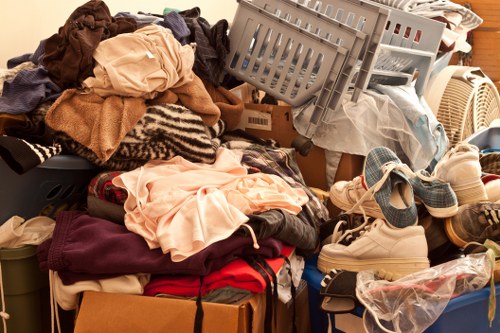
Some commercial waste is less about bags and more about individual items that take up space and require careful lifting. Desks, chairs, shelving, cabinets, sofas in staff areas and redundant appliances can all become part of a workplace clearance. For those loads, the collection needs to suit the size and shape of the items as well as any access limits such as stairways, narrow corridors or shared entrances. That is why item-specific removal pages are useful when the waste is more than general rubbish.
The furniture pages cover different but related needs. furniture clearance is suited to removing several items at once, while furniture disposal is helpful when you are focusing on lawful removal of single items or mixed furniture loads. Where seating is the main concern, mattress and sofa disposal can be a better fit for bulky soft furnishings that need separate handling from desks or office storage.
Jobs involving large items are usually easier to assess when you can describe the items plainly rather than using a broad label. A short note listing what is there, how many pieces need moving and whether any items are fixed in place is often enough for a sensible quotation. If the waste is part of a larger room clear-out, the broader home clearance and flat clearance pages may also help if the same mixed loads appear in living or rental properties.
Office waste and managed workspace clear-outs
Office environments generate a broad mix of waste, from packaging and paper to obsolete equipment, broken furnishings and accumulated storage. A well-planned collection makes it easier to clear unwanted material without interrupting desks, meeting rooms or shared work areas. Where the task involves an entire workplace or a significant section of it, office clearance can cover the practical removal of the items that no longer serve the space, leaving it more manageable for reorganisation or handover.
For more specialised waste streams, office work may need a slightly different route. Documents that must be handled carefully can be separated into shredding arrangements, while broken equipment or old furniture can be grouped by type before uplift. If you are weighing up different service pages, start with office clearance for workplace items, then move to confidential shredding if secure document destruction is part of the job. That keeps the disposal route aligned with the material.
Where a business is preparing a move or an internal change, it can help to make a simple room-by-room note of what remains, what is to stay and what should go. That is not a requirement for every job, but it does make it easier to separate usable stock from unwanted waste. For pricing details or to raise a straightforward enquiry, the pricing and quotes page is the right place to start.
Mixed waste streams and disposal choices
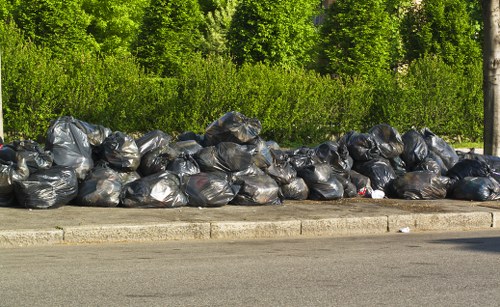
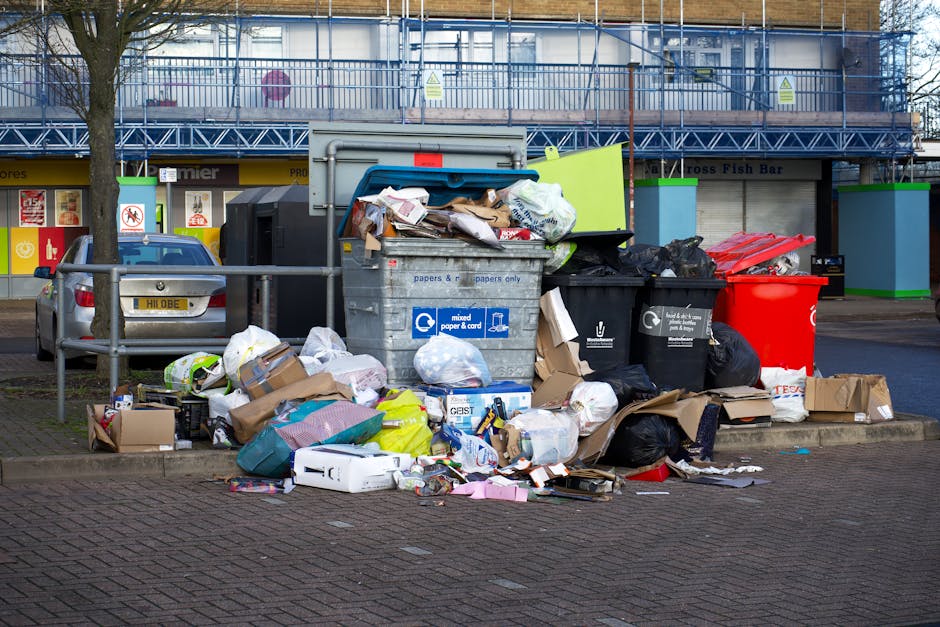
Not every commercial load is neatly one category. A single collection may include packaging, damaged stock, office furniture, small appliances and general rubbish. In those cases it helps to look at the material in groups, because some items are best removed as mixed waste while others are better separated for a specific disposal route. That approach can keep the work practical and reduce confusion about what is included in the collection.
For example, a premises clearing routine waste and a few larger items might use waste removal for the general load, then route the larger pieces through furniture clearance or fridge and appliance removal where appropriate. If the job includes building-related debris rather than everyday business rubbish, the more focused builders waste clearance page is the better match. Choosing the right route keeps the service description closer to the actual work.
To help shape a quotation, it is useful to note whether the load is mainly light material, mixed general waste or made up of a few bulky items. If you are not sure which page is the best fit, send a short description and ask for guidance. The service can then be matched more accurately before any collection is arranged.
About Cobham
Cobham is a village and civil parish in the borough of Elmbridge, Surrey, lying to the west of Esher and south of the River Thames corridor. Its history is visible in a settlement pattern that combines an older village core with later residential development and busy road connections. The area sits near the A3 and the M25, which has long shaped movement around the village while also keeping wider Surrey and London routes within reach. Cobham’s built character includes a mix of older properties, interwar housing, later suburban streets and local facilities centred around the village high street. Historic architecture remains part of the appeal, with buildings such as the parish church of St Andrew providing a reminder of the area’s longer story. The parish church has medieval origins and stands as one of the best-known landmarks in the locality. Cobham Mill, on the River Mole, is another notable historic feature and a striking reminder of the village’s milling past. The nearby parkland landscape also matters to the area’s identity, especially around Painshill, an 18th-century landscaped garden created by Charles Hamilton and now recognised for its ornamental lakes, follies and designed scenery. Cobham has associations with education and independent schooling as well, and the wider parish contains a number of green spaces and mature residential roads that give the village a more settled feel than many commuter centres. Although the place is often discussed for its links to transport and affluent housing, it is also a lived-in Surrey community with a historic core, riverside features and a clear local character shaped by both countryside and suburban change.
Builders’ debris, renovation leftovers and site tidies
Renovation and fit-out work can leave a different sort of waste from day-to-day business refuse. Offcuts, broken boards, packaging, old fixtures and general site mess are often heavier and more awkward to carry than routine rubbish. For those jobs, the collection needs to reflect the material on site and the space available for loading. A tidy-up after works can be arranged alongside other waste removal needs if the premises have mixed material left over.
Builders waste clearance is the specific route for renovation leftovers, while general mixed waste can still be handled through waste removal if the load is not limited to building debris. If the job has created surplus furniture or old fittings, it may also be sensible to separate those items and look at furniture disposal or home clearance depending on the setting. The key is to keep the material grouped by type where that makes the disposal clearer.
For a sensible quotation, it helps to mention whether the load is light, heavy or mixed, and whether anything needs removing from upstairs or a confined area. That is enough detail for many building-related jobs. If the job is part of a larger refurbishment programme, ask for a quote once the main waste types are known, then we can discuss the most suitable collection route.
Garden, outdoor and premises-side waste

Commercial waste is not always confined to the interior of a building. Outdoor areas can generate green waste, broken planters, damaged fencing, soil, packaging from deliveries and general rubbish that has collected near service yards or access points. These tasks are usually best handled as a separate collection rather than left mixed with indoor waste, because the material may need a different approach to loading and sorting.
Where the waste is largely cuttings, branches or other outdoor material, garden clearance is the closest match. If the load includes general rubbish from exterior storage or a garage-like area, garage clearance may be a more accurate description of the job. The purpose of matching the page to the waste is not to make the process complicated; it is to keep the collection description honest and the quotation relevant.
When you request a quotation, include whether the waste is dry, green, mixed or bulky, and whether it is inside a yard, behind a property or near a rear entrance. That helps the collection be planned properly. If you already know the main items, you can also mention them in plain language and ask for the most suitable disposal option.
Pricing factors, preparation and what to include
Commercial waste quotations are usually shaped by the material type, the volume, the weight and any item-specific handling that may be needed. Access matters as well, because lifting from a level loading point is different from removing items from a top floor or through a tight passage. Clear information on those points helps keep the estimate relevant and avoids vague assumptions about the job.
There are a few practical things that can make the process smoother without turning it into a chore. It helps to know whether the waste is already stacked, whether anything needs dismantling, and whether all of it is ready for collection or still in use. If the load includes mixed material, a brief breakdown is useful. For comparison or budgeting, the pricing and quotes page is the right place to start, and book online is available if you prefer to move straight to arranging the work.
Use the simplest description that still tells the truth about the job. A short list like paper, cardboard, two desks and packaging is often more useful than a long general phrase. If you are unsure how to categorise the waste, send the basic facts and ask for guidance. That saves time and gives a cleaner route to a quotation.
Recycling choices, responsible disposal and next steps
Responsible commercial waste work is not only about removing items; it is also about separating material into sensible disposal routes where possible. Paper, cardboard, furniture, appliances and mixed refuse do not always belong in the same stream, so the collection needs to reflect what is actually being taken away. That approach supports better organisation of the job and helps the material move through the right route afterwards.
Where you want to understand the disposal approach in more detail, recycling and sustainability sets out the broader approach, while insurance and safety explains the practical standards linked to collection work. Those pages sit well alongside the service pages because they help you decide how the waste should be managed. If your waste includes sensitive records, appliances or mixed office contents, it is worth choosing the specific page that best matches the material rather than relying on a broad label alone.
If you are ready to move ahead, ask for a quotation in plain terms: what the waste is, where it is, and when you would like it collected. Contact us to discuss the job and request a quote when you are ready.